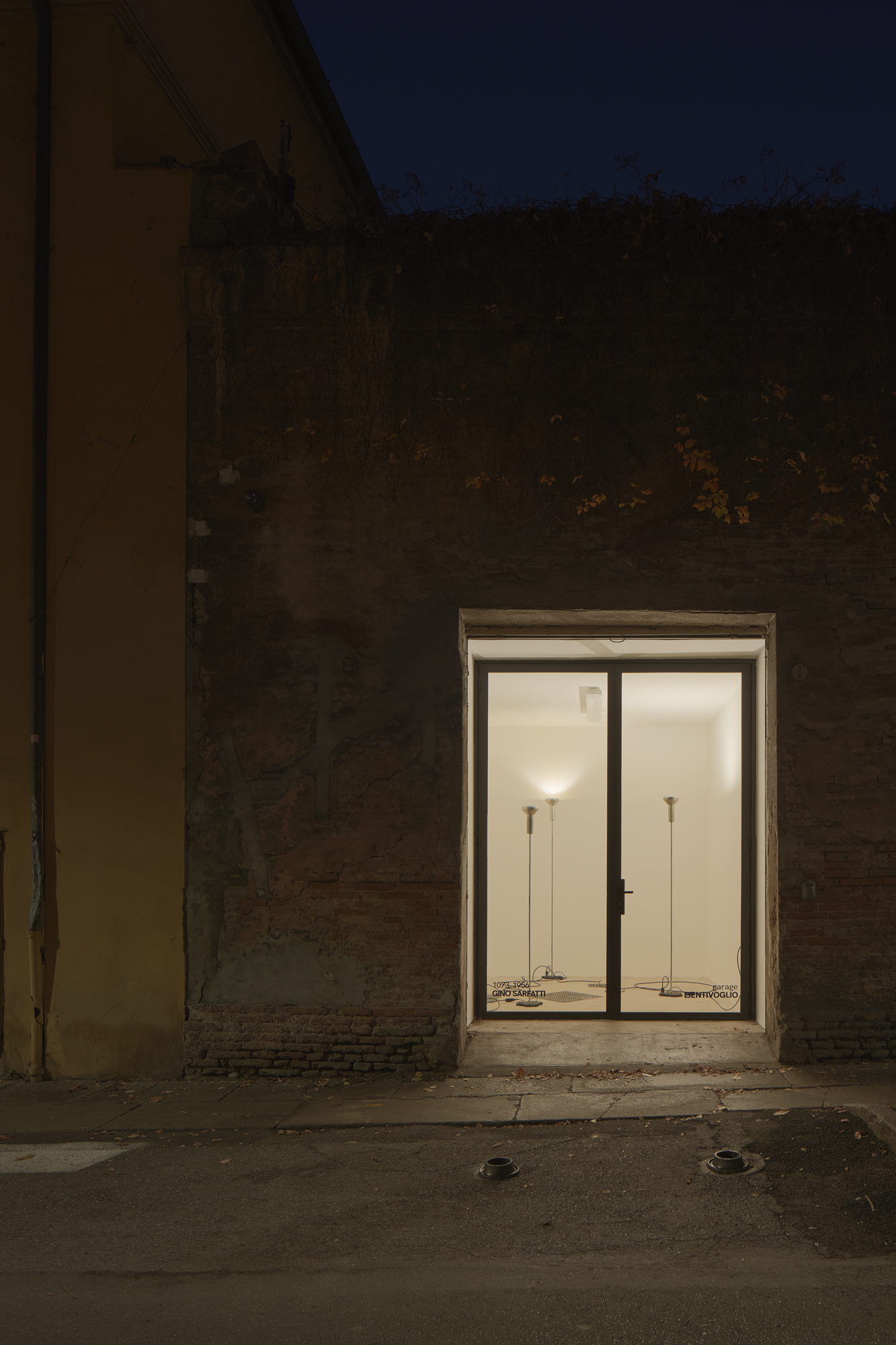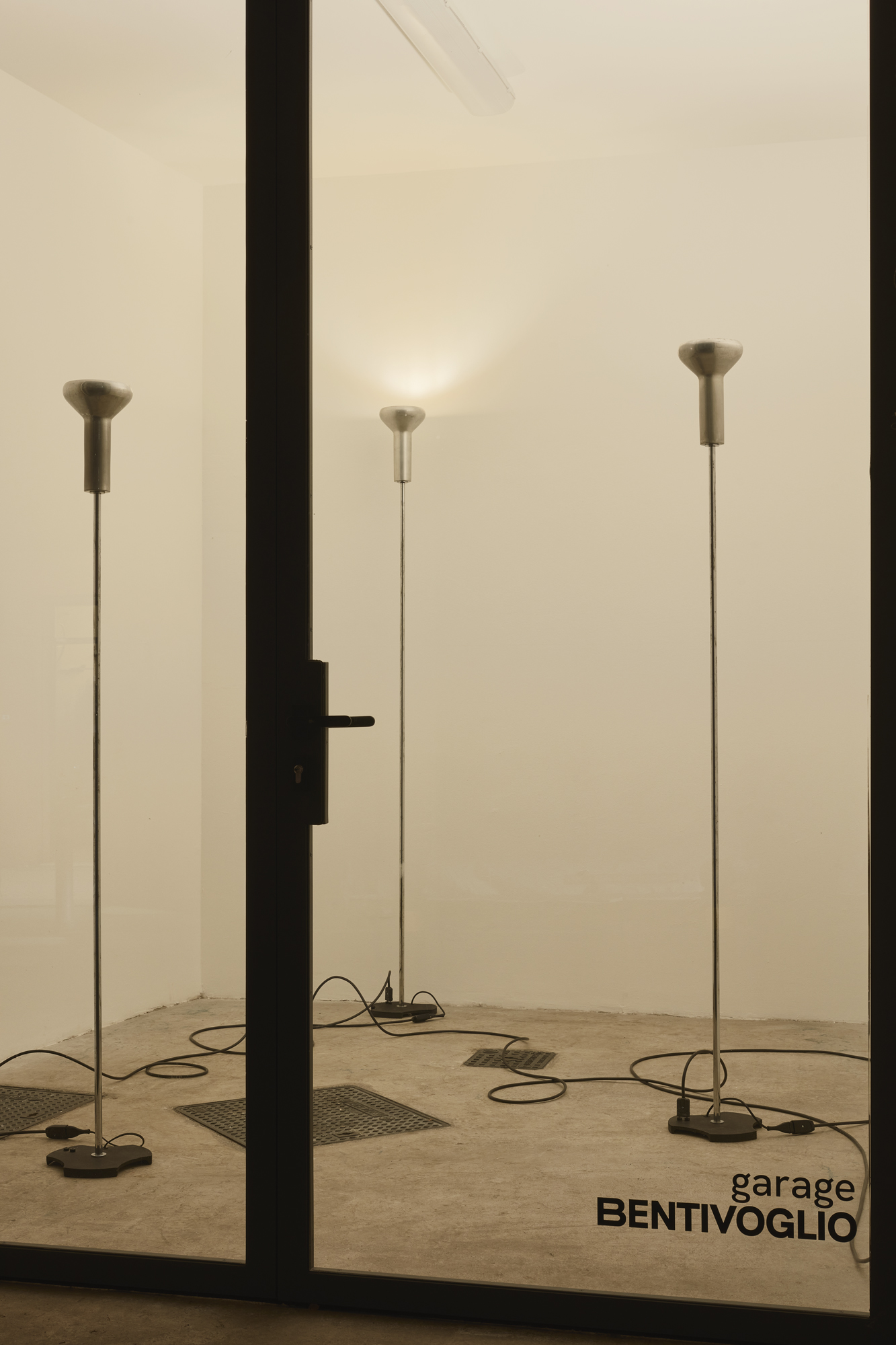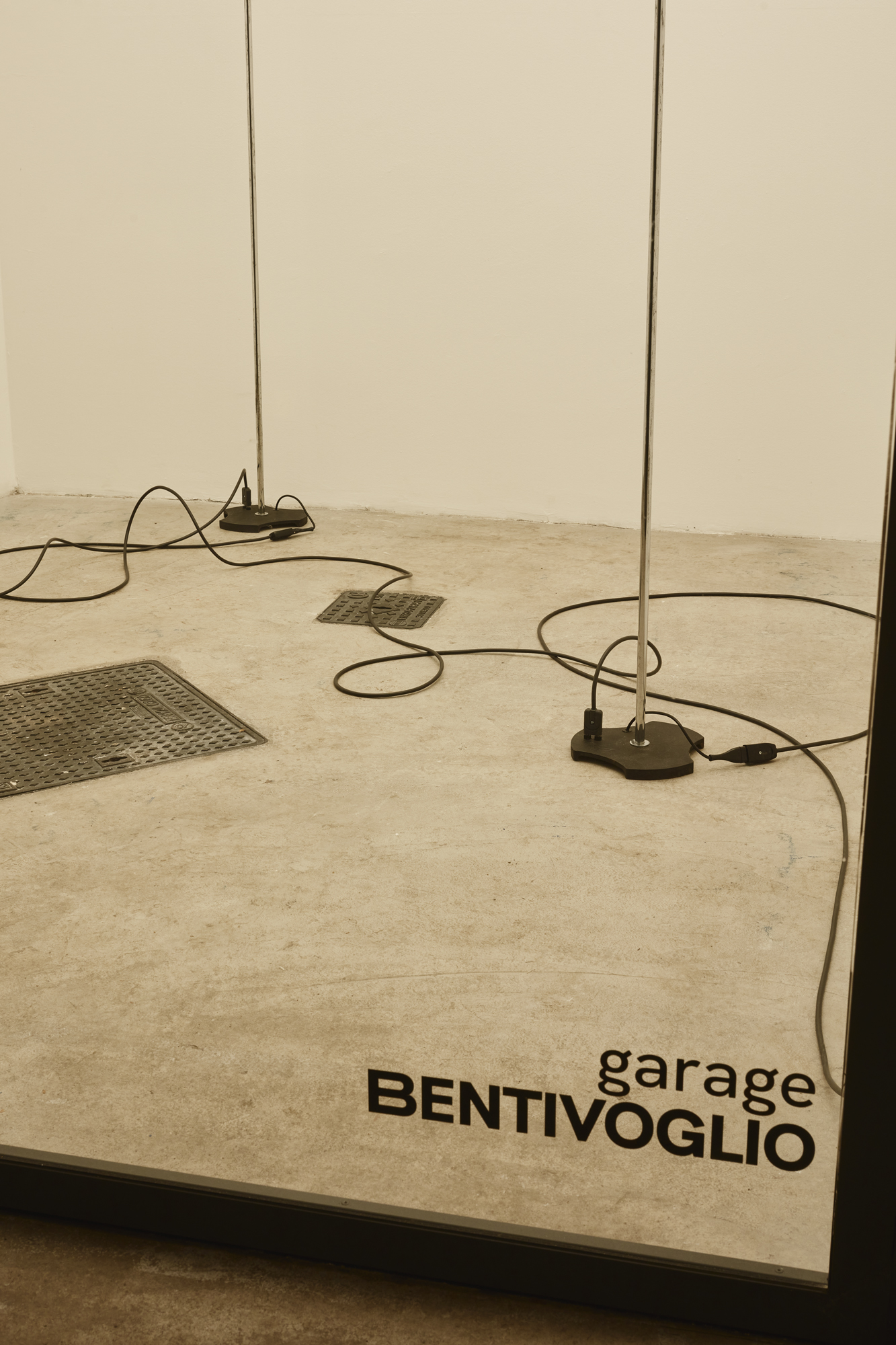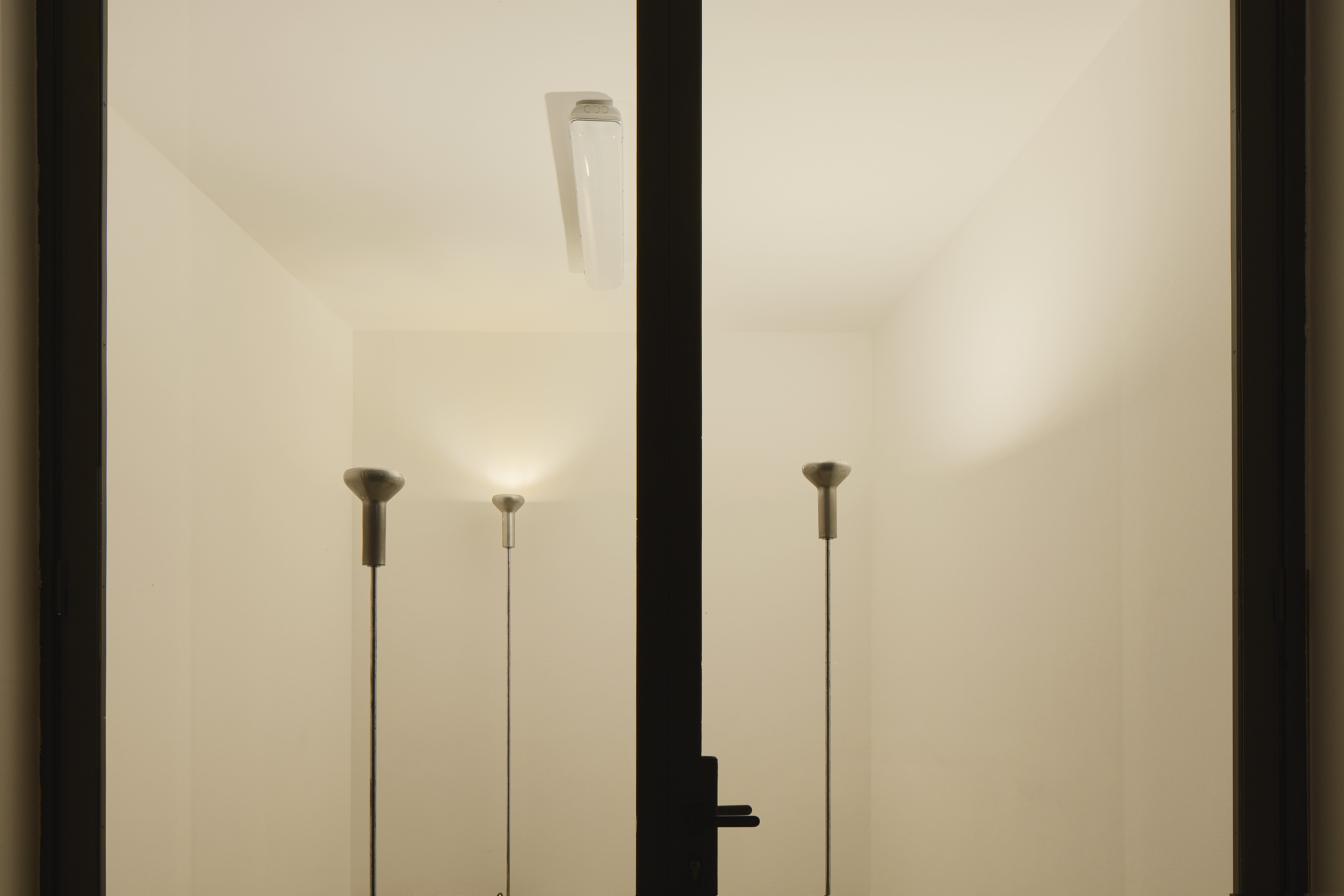
The Arteluce store on Corso Matteotti in Milan, designed by Marco Zanuso in 1953, must have looked like a grove filled with fireflies. Lighting fixtures saturated every available space, claiming every surface and presenting the prospective buyer with endless formal solutions. The driving force behind Arteluce’s success was Gino Sarfatti, one of the brand’s founders and its general manager until it was sold to Flos in 1974. A prolific inventor with a catalog of over 700 different devices, he designed lamps for every product category—from the ‘600’ model, with its soft base that adapts to any surface, to the countless spheres that found their glory in the Teatro Regio in Turin, the final work in the designer and entrepreneur’s extensive portfolio. The 1073, which as its name suggests belongs to the 1000 series—the reference range for floor lamps in the Arteluce catalog—is an extremely elementary object, created by joining three semi-finished components: a cast-iron base, a stem, and a spotlight, either chrome-plated or lacquered depending on the version. In a country rebuilding its industrial sector after the Second World War, it became almost essential to rely on semi-finished materials, which ensured rapid production and, above all, product standardization. Furthermore, with a slight modification, a model could quickly become a new variant, adapting more easily to new needs or changing tastes. The almost immediate update to the 1073, which allows the lighting fixtures to be connected to one another, creates the impression of an infinite serpent of lamps that can wind through a space. With his work, Sarfatti leaves us definitively in the dark, making us forget what remains of the night, as we remain like moths entranced by his lamps. And if at every dawn these lights seem useless once again, the light source will reveal itself in all its useless beauty: an object that will rest throughout the day ahead, waiting for the night.