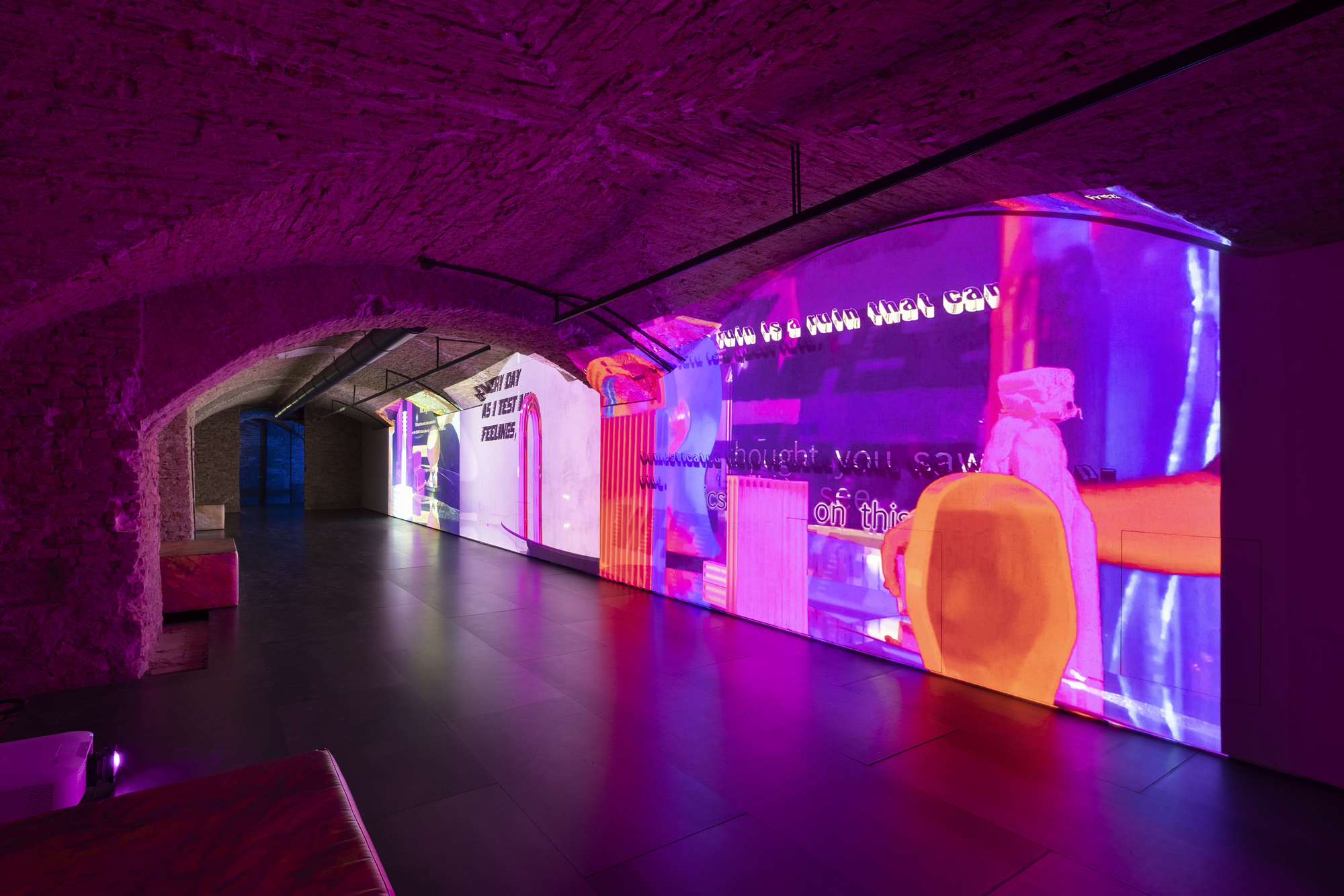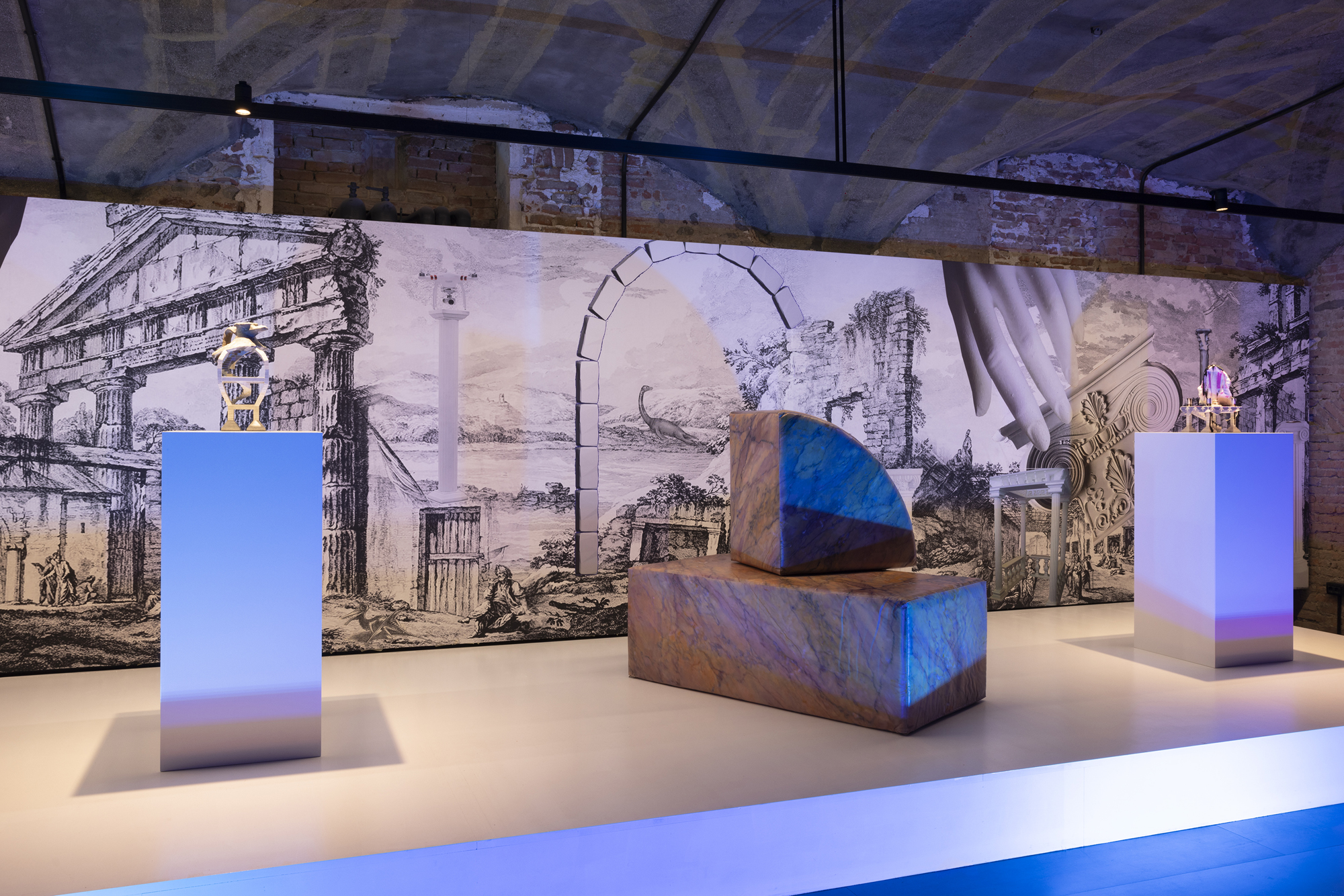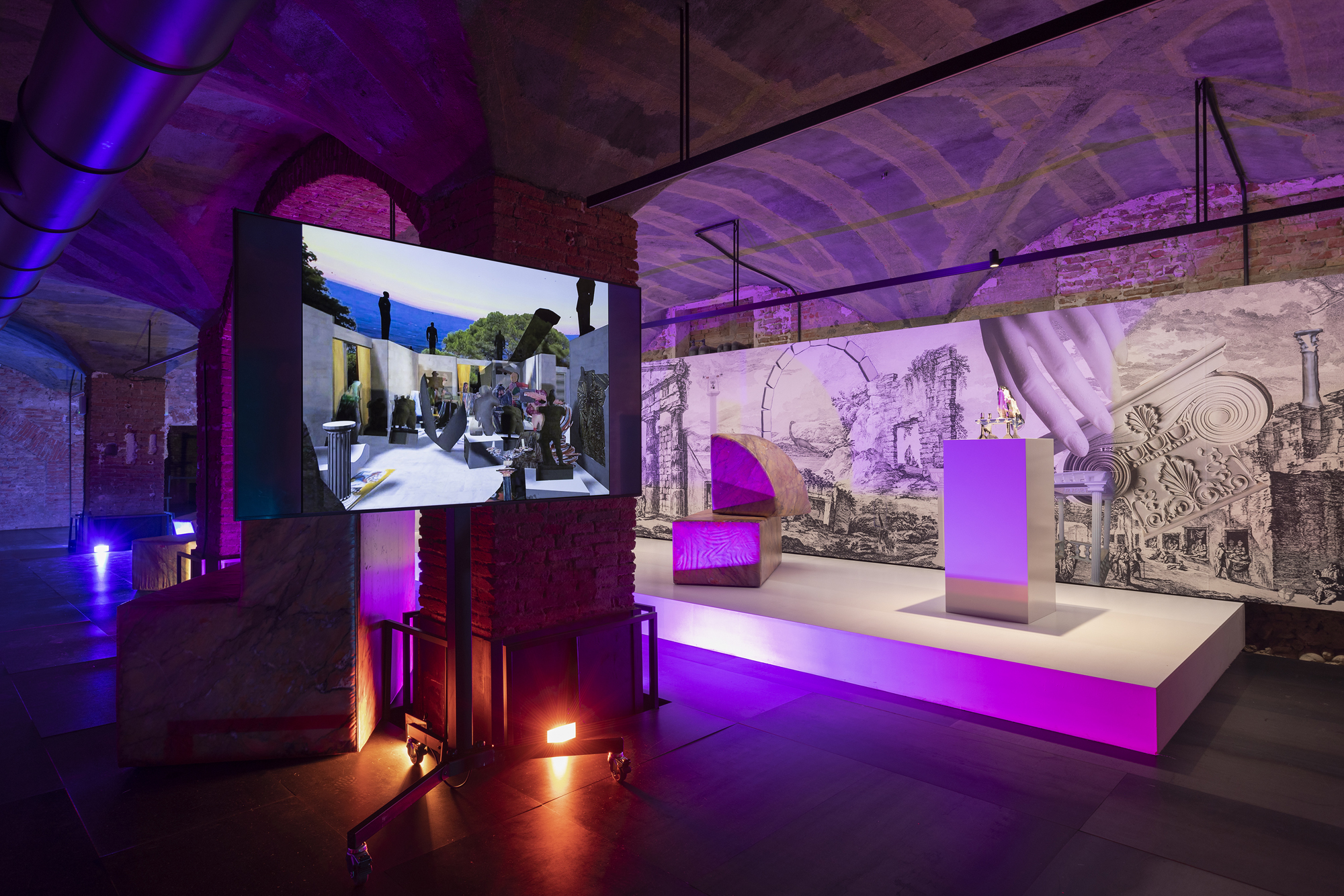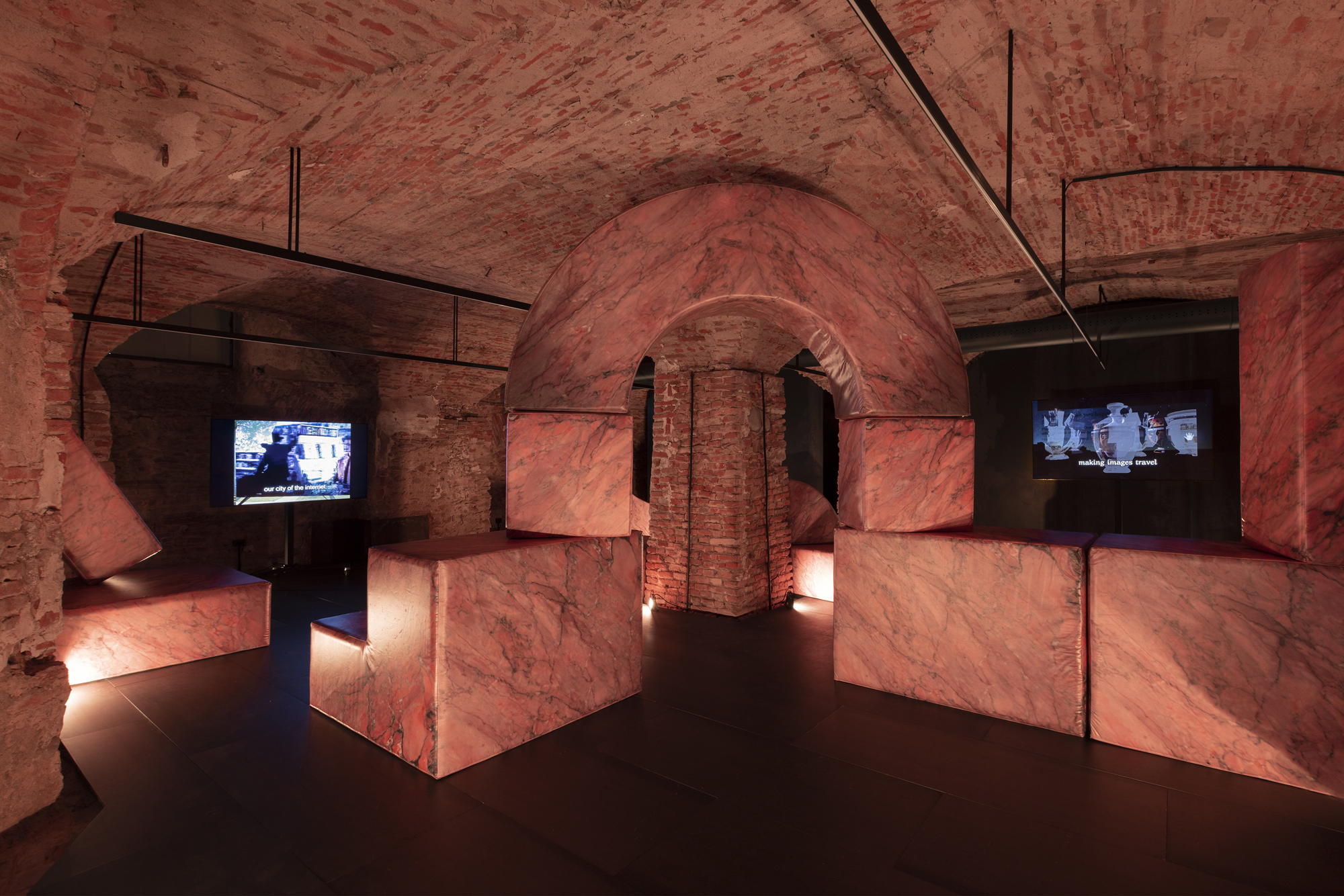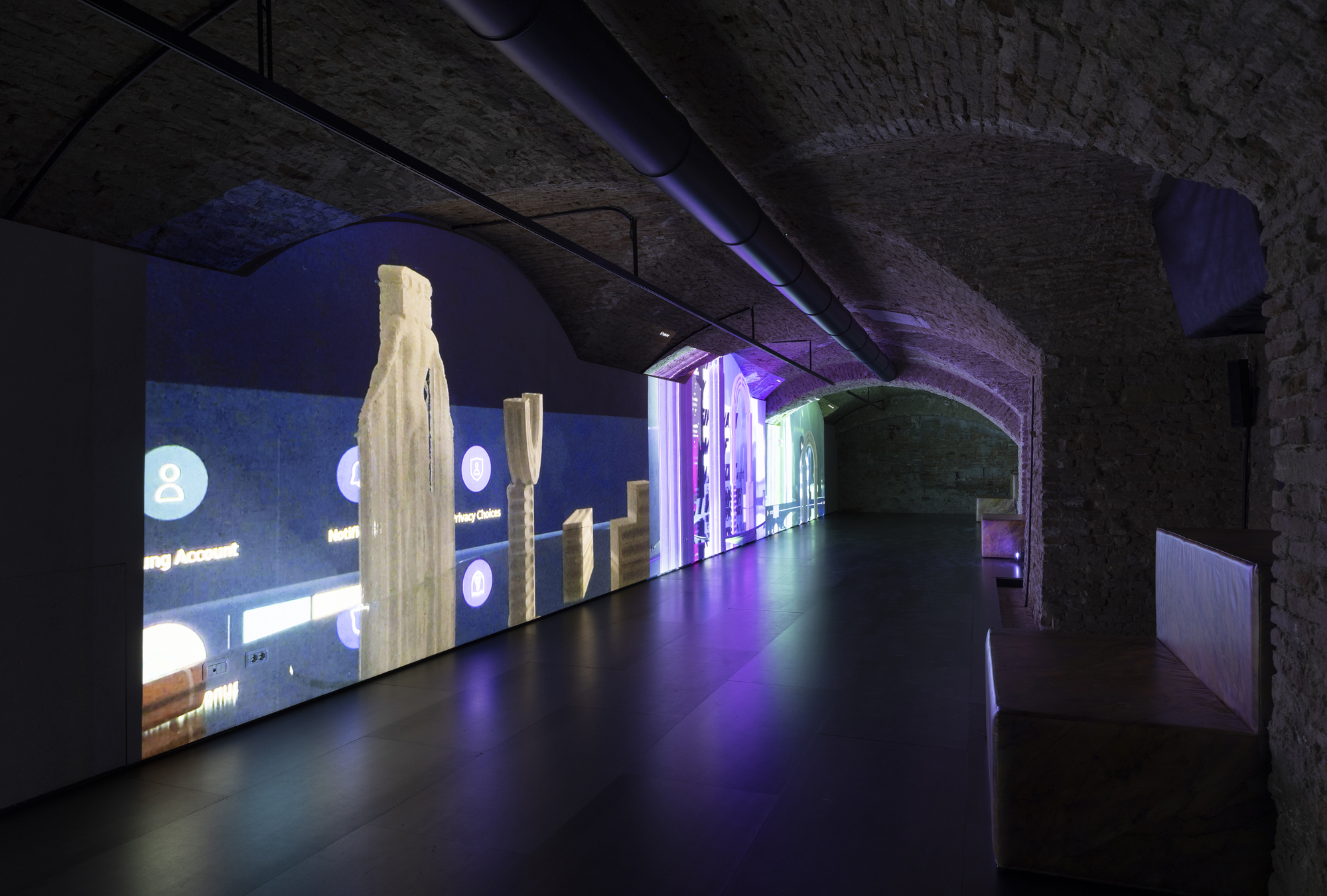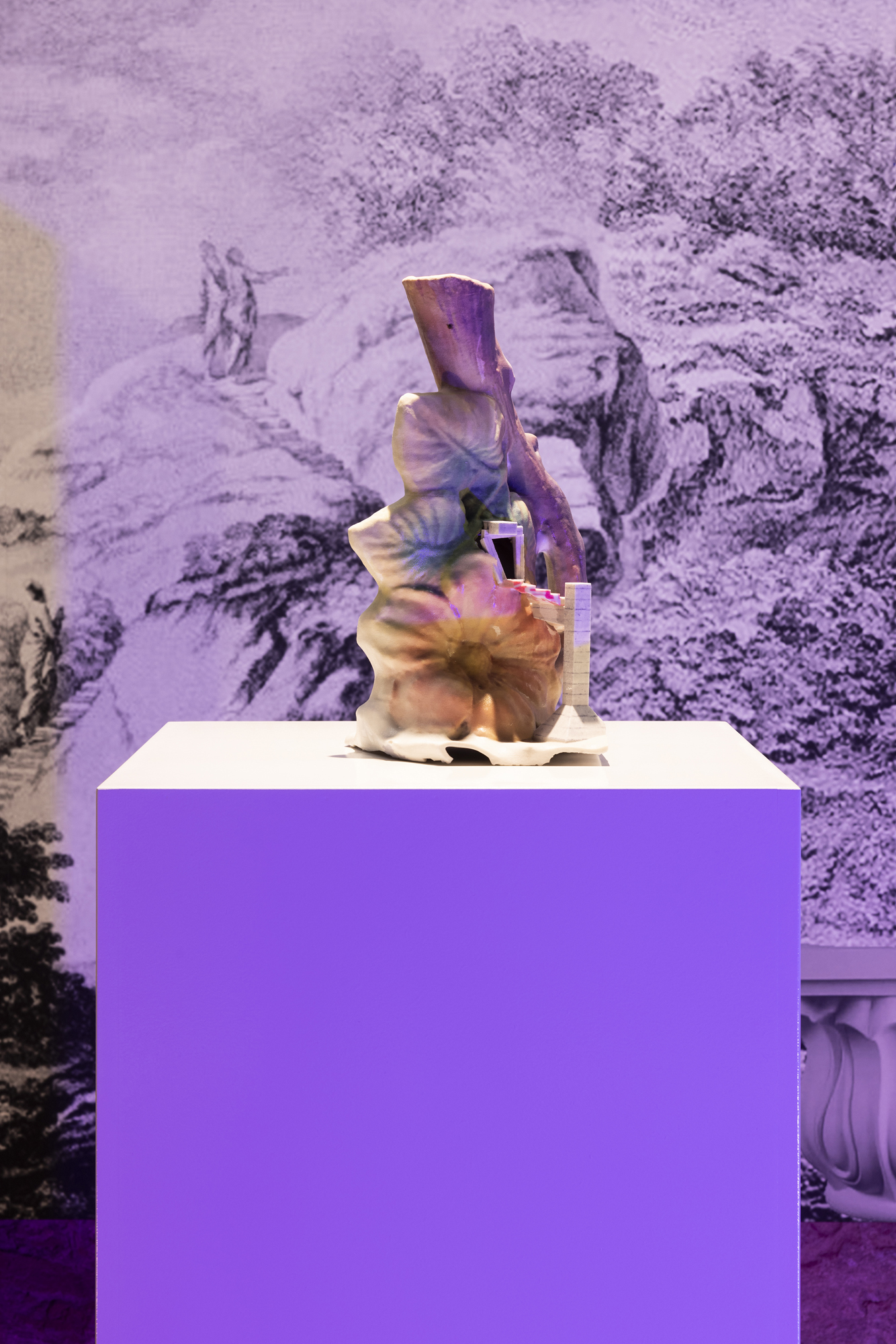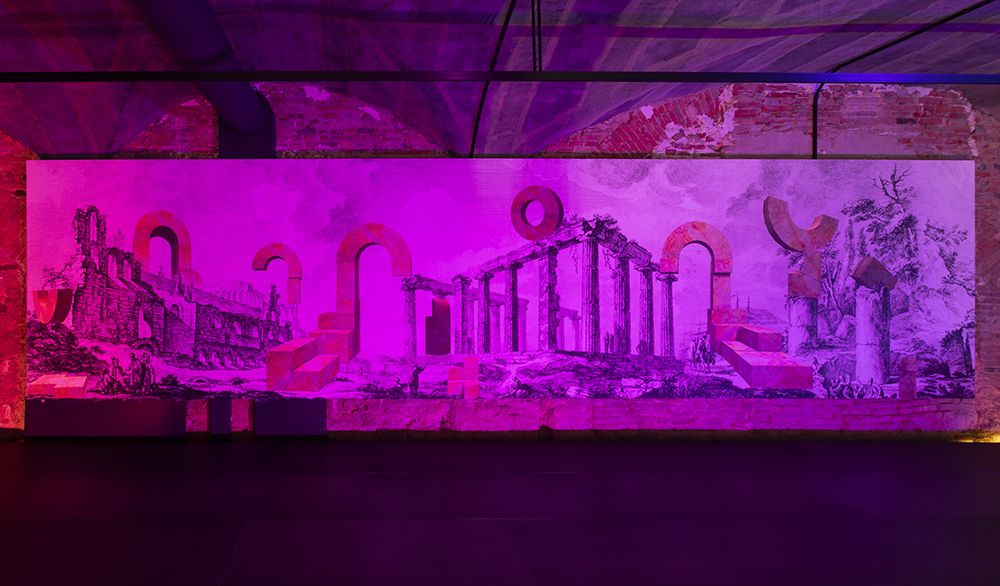
Palazzo Bentivoglio is pleased to present the project by the artist Andreas Angelidakis (Athens, 1968). At the center of everything is the large installation POST-RUIN Bentivoglio (2020), which crosses the three rooms of the sixteenth-century underground. The work, from which the exhibition takes its title, refers to the building's past - linked to the previous palace of the Bolognese family destroyed by a popular uprising - and is part of a series in which the concept of ruin is subverted, making the work usable at will by the public. In fact, it consists of modular elements through which it is possible to modify spaces, assembling them to recreate a hypothetical ancient ruin or dividing and scattering them so as to obtain seats and support points. The blocks, arches and fragments of the ruin are made of soft and light materials. The surface of the pieces is printed with a photograph of a marble pattern. It is a work that questions the monumentality and the distance of respect that we usually recognize in antiquities. In the past, other installations in the same series have been exhibited in important museums and at events such as Documenta 14 in 2017, in which one of these works had become a space dedicated to talks open to the public. Within this exhibition, the installation becomes a sculpture that can be used to experience space and observe other works. As in the first room, where the public is greeted by two large wallpapers (typical of his artistic production) created for the occasion. The subject of both consists of an enlargement of ancient engravings of archaeological ruins, on which the artist inserts classical architectural details brutally recreated in digital or images of the modular elements of the same POST-RUIN installation, allowing us to imagine, as in a dream, his “escape” from the two-dimensional image applied to the walls of the exhibition space. \n In the three exhibition areas, both environmental and screened videos are presented, in which the vision of architecture and the inhabited space during historical progress well exemplifies the work of Angelidakis. The videos are real critical reflections on our way of living and on how technologies shape architecture more than the architects themselves: as in the video in which we imagine a submerged life defined by our new methods of domestic shopping, and in which home delivery boxes become the new physical and symbolic basic elements of architecture. Often in the artist's works, Greek classicism, even in its condition of ruin and monument, re-emerges as a metaphor that can still be used to understand and define the present: an example of this is the video in which the large vase in which the philosopher Diogenes lived is superimposed on the Internet, and the one in which the great gallerist and collector Alexander Iolas and his house seem to embody the entire classicism in his passage from greatness to ruin. Finally, in the final room of the exhibition space, it is possible to admire a triple video projection of the work Screenwalkers, a manifesto capable of condensing its entire poetics. \n Along with the videos, a series of small sculptures created using 3D printers and capable of making real the architectural visions designed on the computer by the artist. These objects are a hybrid of an architectural model and a sculpture. They allow Angelidakis to make real and give a physicality to the utopian architectural whims he dreamed of, while maintaining the independence of construction: flowers and vases merge with the concrete structures typical of the first modernist experiments as well as of the illegal construction of southern Europe, colors and pop images cover the surfaces, elements of classical architecture are decontextualized in an ironic way. These small whims are striking in their plastic three-dimensionality and their complexity in a period like ours in which architecture seems to have become two-dimensionalized and become a pure surface in favor of cameras and social networks, as if it no longer has to house real human beings inside. Andreas Angelidakis moves in the border space where art and architecture overlap. It has been defined as an architect who does not build, but it might be more correct to see him as a critic and an intellectual who uses art to reflect on the space that surrounds us and on the way in which new technologies influence the architecture and life of each of us. His approach never succumbs to the moralism of manners and customs. The irony and playfulness of many of his works are often intrinsically linked to a romantic sense of nostalgia and loneliness capable of bringing out the complexity and mystery of contemporary life. The computer, the Internet and the new social platforms become for him one of the main tools of architectural practice, allowing him to bring a generally collective practice - construction - towards the isolation of artistic and intellectual study.